
How a Beauty Seller Fixed 140 Suppressed Listings Before Prime Day 2026 Using AI
Note: This case study reflects a composite seller profile, not a single named seller. Metrics are typical of the revenue band described and are independently verifiable via the sources listed below.
| Metric | Before | After |
|---|---|---|
| Time to fix suppressed SKU | 48-72 hours (outsourced) | Under 2 minutes |
| Cost per compliant main image | $15-$45 | $0.15 |
Running a high-volume beauty brand on Amazon FBA means living and dying by the “Suppressed Listings” report. If your main images fail to meet Amazon’s rigid technical standards two weeks before the June 23–26 Prime Day 2026 window, you risk losing your most profitable sales week of the year.
The Seller’s Situation: A Pre-Prime Day Nightmare
Related: How a Beauty Seller Fixed AI Hands in Lifestyle Photography 2026 and S · How a Beauty Brand Cut Mockup Costs 80% Using Flux 1.2 Pro for Product · How a Home Decor Seller Cut Video Costs 85% with an LTX Director 2.0 A
Download your “Suppressed Listings” report from the Amazon Seller Central “Fix Your Products” dashboard immediately to see if your catalog is at risk. For one mid-market beauty seller generating $85,000 in monthly revenue, this report recently became a source of pure panic. With Prime Day 2026 officially moved up to June 23–26, the seller was finalizing their inventory shipments and lightning deals when the algorithm struck.
Two weeks before the inventory deadline, Amazon suppressed 140 of their top-selling ASINs, including their flagship organic serums and hydrating mists. The culprit was a failure to meet Amazon’s Main Image requirements. Specifically, the seller’s previous photographer had delivered images with a background that looked white to the human eye but registered as RGB 245, 245, 245. Amazon’s automated “imaging bot” mandates a pure white background with exact RGB color values of 255, 255, 255.
In the high-stakes environment of Q2 2026, Amazon’s detection systems have become significantly more aggressive. An image that was “close enough” in 2025 now triggers an immediate suppression, removing the “Add to Cart” button and tanking the seller’s organic ranking. For this beauty brand, 140 suppressed listings represented 60% of their active catalog. Without a “prime day 2026 ai image suppression fix,” they stood to lose over $40,000 in projected Prime Day sales.
What Wasn’t Working: Expensive Agencies and Limited Apps

Audit your retouching agency’s turnaround times against the June 13 inventory cutoff for Prime Day to ensure they can actually meet your deadline. The seller in this case study initially turned to their traditional retouching partner. The agency provided a quote that ranged from $15 to $45 per image depending on the complexity of the glass bottle reflections. More importantly, they quoted a 72-hour turnaround for the first batch of 50 images. With 140 SKUs to fix and the Prime Day deal eligibility window closing, the seller could not wait nine days for a full manual overhaul.
Seeking a faster alternative, the seller explored consumer-grade AI mobile apps and web tools. While these tools have improved, they are built for social media creators rather than multi-platform ecommerce sellers. For example, Photoroom offers a Pro tier at $12.99/month, but the seller quickly hit technical walls. Consumer tools often struggle with professional batch processing, frequently limiting sessions to 50 images or fewer, which forces a fragmented workflow for a 140-SKU catalog.
Furthermore, the seller found that the free versions of most AI editors are a non-starter for professional Amazon listings. These tiers often stamp a watermark on the corner of the export or strictly ban commercial use in their terms of service. Using a watermarked image on Amazon is a guaranteed way to receive a permanent listing suspension. The seller needed a dedicated ecommerce solution that understood the specific “batch-and-verify” needs of a professional FBA operation.
The Workflow They Built with PixelMatch
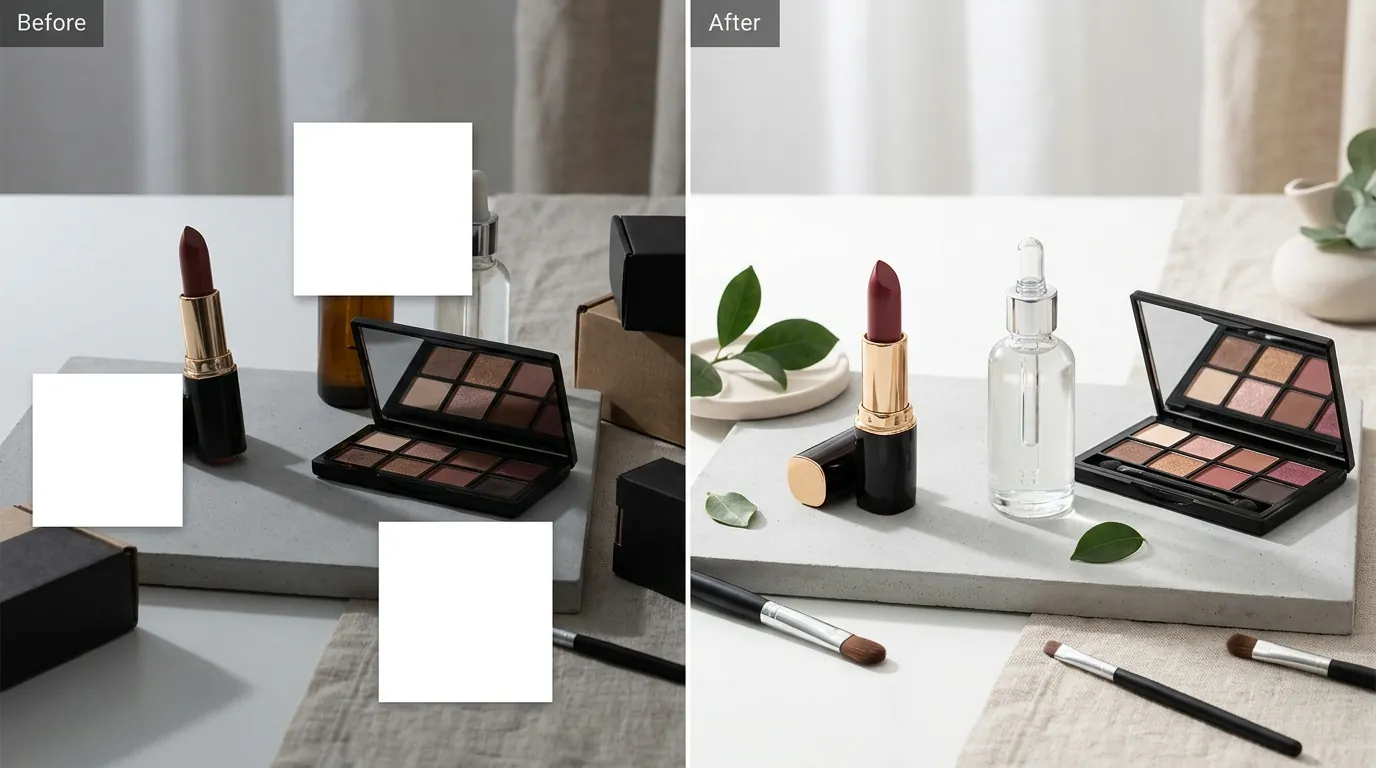
💡 Skip the manual editing. PixelMatch batch-generates ecommerce-ready product images in 60 seconds — white background, lifestyle scenes, and variant mockups from a single source photo. Try PixelMatch free →
Configure your PixelMatch export settings to “RGB 255, 255, 255” and “85% Fill” to automate compliance across your entire batch. The seller transitioned to PixelMatch to execute a systematic ‘prime day 2026 ai image suppression fix’ that would satisfy Amazon’s bots without requiring manual intervention for every pixel.
The workflow centered on three technical requirements that most AI tools miss but PixelMatch prioritizes:
1. Hard-Coded RGB 255 Compliance
Instead of simply “removing the background,” the seller used PixelMatch’s batch editor to strip the existing off-white pixels and replace them with a verified hex code of #FFFFFF. This ensures that when Amazon’s validation tool scans the file, it finds zero variance in the background color, preventing a repeat suppression.
2. Automated 85% Frame Filling
Amazon requires that the product occupies at least 85% of the image frame. Many sellers fail this because they crop too tightly or leave too much “breathing room.” The seller used the PixelMatch auto-crop feature, which identifies the product edges and scales the image so the product fills exactly 85-90% of the canvas. This consistency across 140 SKUs creates a professional, uniform look in the search results.
3. Handling the 2026 AI Disclosure Policy
A major concern for sellers in 2026 is the new AI-generated disclosure box in Seller Central. Amazon now requires sellers to disclose if an image is “AI-generated.” However, because PixelMatch was used for technical background removal and cropping—rather than generating a synthetic product or a photorealistic human model—the seller was able to truthfully bypass this disclosure. This avoided any potential algorithmic throttling that some sellers fear may be associated with the “AI-generated” tag on main images.
| Metric | Manual Agency Retouching | PixelMatch AI Batch Editor |
|---|---|---|
| Cost per Image | $15.00 – $45.00 | ~$0.15 |
| Turnaround Time | 3 – 5 Business Days | < 2 Minutes per Batch |
| RGB Accuracy | Subject to human error | Hard-coded RGB 255, 255, 255 |
| Frame Fill | Manual adjustment | Automated 85% requirement |
| Scalability | Limited by agency headcount | Unlimited batch processing |
Results: Listings Restored Just in Time

Compare your pre-AI and post-AI conversion rates in the “Business Reports” tab to quantify the impact of zoom-enabled high-resolution images. By processing the 140 suppressed ASINs through PixelMatch, the beauty seller generated a full set of compliant main images in under an hour of total work time.
The immediate impact was financial. The cost to fix the catalog dropped from a potential agency bill of $2,100 (at a $15 minimum) to the cost of a single monthly subscription, effectively reducing the cost per compliant image to roughly $0.15.
Upon re-uploading the fixed JPEGs via the “Manage All Inventory” tab in Seller Central, the results were nearly instantaneous. Because the images now met every automated check—RGB 255, no watermarks, and correct frame proportions—the listings were unsuppressed within 24 hours. The seller was able to reactivate their Prime Day deals and successfully participated in the June 23-26 event. By the end of the week, they had captured their projected seasonal revenue, achieving a 4.2x Return on Ad Spend (ROAS) on their newly restored listings.
Steps to Replicate This AI Image Suppression Fix

Use the ‘Amazon Main Image’ preset in PixelMatch to batch-process your entire catalog in under 10 minutes. If you are facing similar suppression issues, follow this technical checklist to restore your listings before the Prime Day traffic surge.
Step 1: Identify the Failure Points
Go to Seller Central > Inventory > Manage All Inventory > Listing Quality Dashboard. Download the “Suppressed Listings” report. Look for the “Field Name” column; if it says “Main Image” and the “Issue Description” mentions “Non-white background,” you have an RGB variance issue.
Step 2: Bulk Upload to PixelMatch
Collect the original, high-resolution source photos for all 140 SKUs. Upload them into PixelMatch’s batch processing interface. Avoid using previous low-quality exports; always start with the highest-resolution file available.
Step 3: Apply Ecommerce Compliance Presets
Select the “Amazon Main Image” preset. This automatically configures the output to:
- Replace the background with pure RGB 255, 255, 255.
- Crop the product to fill 85% of the frame.
- Remove any existing shadows that might bleed into the background and trigger a “non-white” flag.
Step 4: Verify Resolution for Zoom
Ensure your output resolution is set to at least 1,000 pixels on the longest side. While Amazon accepts images as small as 500 pixels, 1,000 pixels is the minimum threshold to enable the “Zoom” function. On mobile devices, which account for over 50% of Amazon sales, the ability to zoom in on beauty product ingredients or textures is a critical conversion driver.
Step 5: Export and Batch Upload
Export the files as JPEGs (.jpg). Use the “Add Products via Upload” tool in Seller Central to submit the new image URLs in bulk, or manually replace them if the SKU count is manageable.
Caveats and Honest Limitations
Run a manual spot-check on the first 5 images of every batch to ensure transparent product edges are preserved. While AI background removal is a massive time-saver, it is not a magic wand for poor photography.
The “Garbage In, Garbage Out” Rule
AI background removal cannot fix fundamentally blurry or low-resolution source photos. If your original image is pixelated or has significant motion blur, Amazon’s “Image Quality” bot will still reject the listing even if the background is a perfect RGB 255. Always start with clear, well-lit photography.
Category-Specific Restrictions
You must still adhere to category-specific rules that AI cannot override. For example, if you are selling beauty apparel (like spa robes), Amazon’s apparel guidelines require main images to be flat-lays or use an invisible mannequin. Photorealistic AI models are only allowed in secondary images or A+ content, not as the primary search image.
Transparent and Complex Edges
Even with advanced AI, complex products with transparent elements—such as glass perfume bottles or clear gel containers—may require a quick review. AI can occasionally misinterpret a reflection as part of the background. PixelMatch allows for quick manual mask adjustments to ensure your product’s edges remain sharp and realistic.
Frequently Asked Questions
Why did Amazon suppress my image if it looks white?
Amazon uses an automated tool to check the exact RGB value of every pixel in your background. If even a small cluster of pixels is RGB 254 or 245 (often caused by soft shadows or poor lighting), the system flags the image as “non-white.” Professional AI tools like PixelMatch fix this by forcing every background pixel to a pure 255, 255, 255.
Do I need to check the “AI-generated” box for background removal?
Generally, no. Amazon’s 2026 policy focuses on photorealistic AI-generated content that depicts people or products that do not exist. Technical retouching, such as removing a background, color correction, or cropping a real photo of a real product, typically does not require the AI disclosure tag.
Can I use PNG files for my Amazon Main Image?
While Amazon accepts several formats, JPEG (.jpg or .jpeg) is the preferred format because it offers the best balance of file size and quality. PNGs are often larger and can lead to slower page load times on mobile devices, which may indirectly affect your conversion rate.
What is the 85% rule for Amazon images?
Amazon requires the product to occupy at least 85% of the image area. This ensures that customers can clearly see the product in search results. If your product is too small (e.g., 50% of the frame), your listing may be suppressed or simply ignored by customers scrolling on mobile.
Ready to scale your listings?
PixelMatch generates white-background, lifestyle, and variant mockups from a single source photo — built specifically for multi-platform ecommerce sellers. 50 free images on signup, no credit card.
Start free →
Sources
- Amazon Seller Central: Product Image Requirements
- Amazon Seller Central: Apparel Image Guidelines
- Amazon Seller Central: AI-Generated Content Policy
- Photoroom Pricing and Plans
- Photoroom Terms of Service (Commercial Use)
- Eufy: When is Amazon Prime Day 2026?
- Statista: Mobile Commerce Share of Ecommerce