Etsy AI Image Disclosure Requirements 2026: Seller Guide
Scaling your shop with AI shouldn’t mean risking a permanent suspension or a legal notice from the State of New York. As marketplace algorithms and consumer protection laws evolve, staying compliant with disclosure requirements is the only way to protect your seller account and maintain buyer trust.
Etsy has updated its policies to reflect the growing use of generative tools, categorizing AI-assisted items under specific “Creativity Standards.” Furthermore, regional laws like the New York AI Transparency Act now impose strict requirements on how you present AI-generated human likenesses to customers. This guide breaks down exactly how to navigate these rules in 2026.
Quick Answer
Related: Stable Diffusion 3 Product Text Rendering Guide for Sellers · TikTok Shop Symphony Digital Human Image Specs (2026) · TikTok Shop Image Specs for Video Shopping Ads (2026)
As of 2026, Etsy requires sellers to disclose AI-generated items in the listing description. Additionally, the new NY AI Transparency Act (effective June 9, 2026) mandates disclosing AI-generated human models in product photos or mockups.
Quick Reference Table
Audit your current listings against the table below to identify which items require an immediate “AI disclosure” tag or a visual badge.
| Requirement Category | Specific Rule | Required Action |
|---|---|---|
| AI-Generated Digital Art | Must be disclosed as AI-created | Add disclosure to the listing description. |
| AI Human Models | Must have “conspicuous” disclosure | Overlay an “AI model used” badge per the NY AI Transparency Act. |
| AI Backgrounds | Permitted for mockups | Ensure the product itself is real; use tools like PixelMatch for compliant backgrounds. |
| Primary Listing Photo | Must represent the actual item | Do not use AI to generate the core product in the main image. |
| AI Prompt Bundles | Strictly prohibited | Remove any listings selling AI prompt sets. |
Detailed Requirements

💡 Skip the manual editing. PixelMatch batch-generates ecommerce-ready product images in 60 seconds — white background, lifestyle scenes, and variant mockups from a single source photo. Try PixelMatch free →
Navigate to your Etsy Shop Manager and update the “Production Partners” section or individual listing attributes if you use AI tools to generate the core design of your digital products. Etsy’s 2026 stance focuses on transparency: buyers must know when a “creative spark” was assisted by an algorithm.
Listing Description Rules
Under Etsy’s Creativity Standards, any item that is significantly generated by AI must be disclosed. This applies primarily to digital downloads, such as AI-generated wall art or patterns. You are required to include a clear statement within your listing description. While Etsy does not mandate a specific location (like the first two lines), the disclosure must be present to avoid “misleading” the buyer.
When writing your description, use clear language such as: “This digital artwork was created using AI tools and edited by the seller.” This ensures you meet the “Designed by a seller” criteria, which Etsy uses to distinguish between handmade, vintage, and artist-designed goods.
AI Models and Mockups
The New York AI Transparency Act (Senate Bill S8420A), which went into effect on June 9, 2026, has significant implications for Etsy sellers who ship to or operate within New York. The law requires “conspicuous disclosure” when a “digitally created or altered” human likeness is used in an advertisement—which includes your Etsy listing photos.
If you use AI-generated models to showcase apparel, jewelry, or accessories, you must add a visible label to the image. A small, legible badge stating “AI model used” or “Digitally generated person” is necessary to remain compliant. Failing to do so could result in legal scrutiny under consumer protection statutes designed to prevent deceptive advertising.
Categorization and Dropdowns
To align with Etsy’s backend requirements for AI-assisted products, you must select the correct options in the listing details. For products designed using AI, set your dropdowns as follows:
- About this listing: “I did”
- What is it: “A finished product”
- When was it made: “Made to order” or the specific year.
By selecting “I did,” you are claiming the design as your own creative work, even if AI was the tool used to manifest it. This distinguishes your shop from those selling mass-produced items or items they did not design.
Common Rejection Reasons
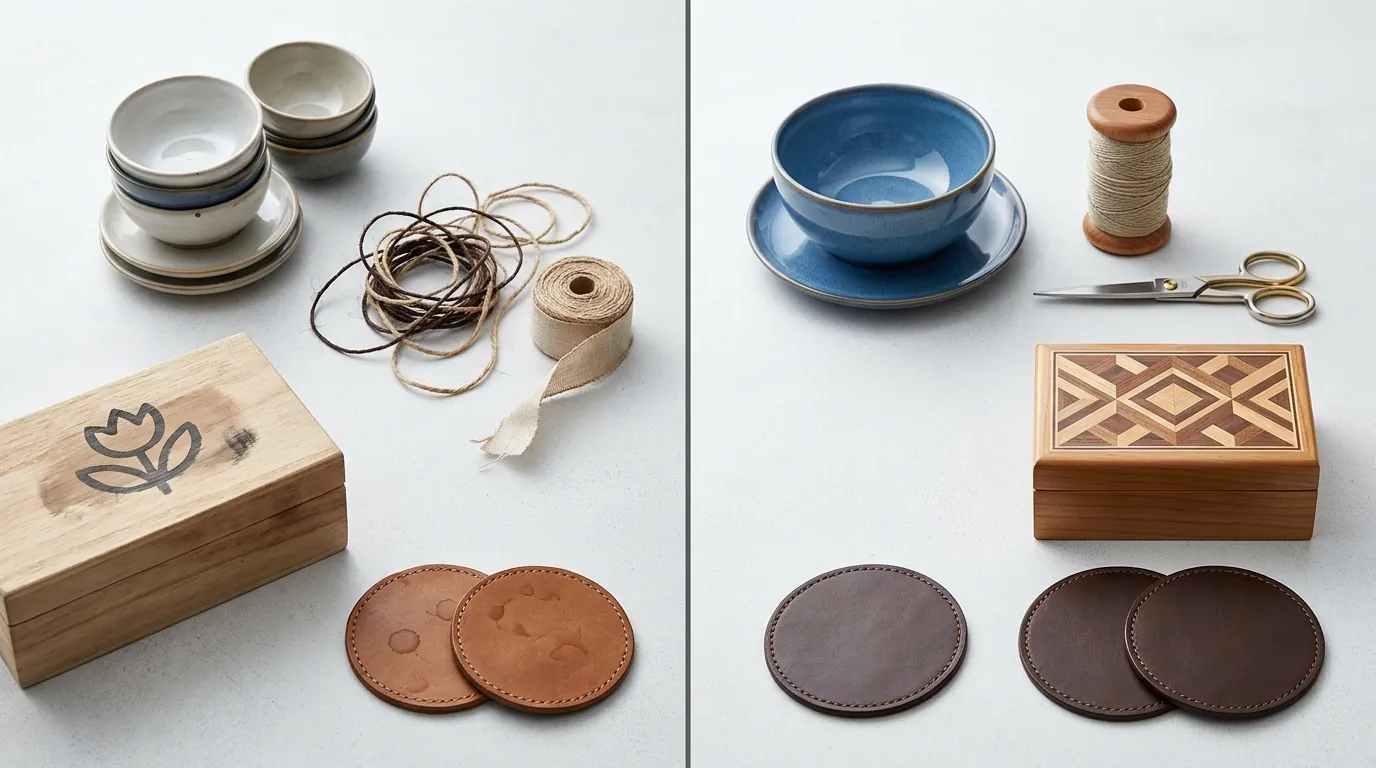
Review your primary listing photos to ensure the product itself is not an AI-generated representation that differs from the physical item the customer will receive. Etsy’s automated systems and manual reviewers are increasingly sensitive to AI “hallucinations” that misrepresent product quality.
- Missing AI Disclosure in Descriptions: This is the most frequent cause for listing flags. If your item is listed in a digital art category but lacks an AI mention, it may be hidden from search results until updated.
- Inaccurate Primary Photos: Using AI to generate the entire image—including the product itself—is a violation of Etsy’s photo requirements. The primary photo must show the actual product. Tools like PixelMatch help you stay compliant by allowing you to upload a real photo of your product and generating only the background (lifestyle scene) around it.
- Prohibited Prompt Bundles: Many sellers attempt to sell “Midjourney Prompt Packs” or “ChatGPT Prompt Lists.” Etsy’s Seller Policy prohibits the sale of these bundles, as they do not meet the criteria for a “finished product” or a “craft supply” in the traditional sense.
- Non-Conspicuous Model Labels: Following the June 9, 2026, NY law, simply putting a disclosure in the description is not enough for AI-generated humans. If the label on the image is too small to read or hidden in a corner with low contrast, it fails the “conspicuous” test and puts your shop at risk.
- Over-Processing with AI: If a customer receives a physical item that looks significantly different from the AI-enhanced listing photo (e.g., colors are neon in the photo but dull in person), Etsy will almost always side with the buyer in a “Not as Described” case.
How to Fix Each Issue
Use a bulk editing tool or Etsy’s native bulk editor to append a standard disclosure statement to all listings categorized under “Designed by a seller.” Taking proactive steps now prevents the “Listing Deactivated” emails that can cripple your seasonal sales.
Step 1: Audit and Update Descriptions
Run a search within your own Shop Manager for keywords like “digital,” “art,” or “print.” For every listing that utilized AI in the creation process, add a sentence: “Created with the assistance of AI and refined by [Your Shop Name].” This satisfies the Etsy Creativity Standards.
Step 2: Apply Visual Badges to AI Models
For any lifestyle images featuring AI-generated people, use an image editor to overlay a text badge. Ensure the text is high-contrast. If you are using Photoroom’s Pro tier at $12.99/mo or Adobe Express’s Premium plan at $9.99/mo, you can create a standard template with this badge and apply it to your entire 2026 catalog in minutes.
Step 3: Recalibrate Your Primary Photos
If your current main image is a 100% AI-generated mockup, replace it with a photo of the actual item. You can still use AI to enhance the environment. For example, PixelMatch allows you to keep your actual product as the central focus while “batch-generating AI product images” for the background, ensuring your 2000 pixels wide images are both high-resolution and policy-compliant.
Step 4: Correct Production Partner Settings
If you use an AI tool as a significant part of your workflow, consider listing the tool or the process in your “Production Partners” section if it involves outside technical assistance. While not always strictly required for solo AI use, it provides an extra layer of transparency that protects you during manual shop reviews.
Frequently Asked Questions
Do I need to disclose if I only used AI to remove a background?
No, using AI for basic photo editing like background removal or color correction does not require a disclosure under Etsy’s current Creativity Standards. These are considered standard post-processing tools, similar to using Photoshop filters. However, if you use AI to generate an entirely new lifestyle scene or a human model, you must follow the disclosure rules.
What happens if I ignore the New York AI Transparency Act?
If you sell to customers in New York, failing to disclose AI-generated human models can lead to fines from state regulatory bodies and potential class-action lawsuits for deceptive advertising. On the platform side, Etsy may deactivate listings that receive legal complaints or violate regional laws to protect the marketplace from liability.
Can I sell AI-generated prompts if I call them “Craft Supplies”?
Etsy has moved to restrict the sale of AI prompt bundles because they do not fit the definition of a physical craft supply or a unique digital design product. Sellers who attempt to circumvent this by miscategorizing them often face shop suspension. It is better to sell the results of the prompts (e.g., a digital paper pack) rather than the prompts themselves.
Does Etsy’s AI policy apply to physical handmade items?
If you used AI to help design a physical item that you then hand-make (like a 3D-printed vase designed via AI), you should still categorize it correctly. You would select “I did” and “Made to order,” and it is best practice to mention the AI design process in your description to maintain transparency with buyers who value the “handmade” aspect.
Official Source Links

- Etsy Seller Policy
- Etsy’s Creativity Standards
- New York State Senate Bill S8420A (AI Transparency Act)
- Etsy Help: Requirements and Best Practices for Images
- Photoroom Pricing and Features
- Adobe Express Premium Pricing
Ready to scale your listings?
PixelMatch generates white-background, lifestyle, and variant mockups from a single source photo — built specifically for multi-platform ecommerce sellers. 50 free images on signup, no credit card.
Start free →
Sources
- https://www.etsy.com/legal/sellers/
- https://www.etsy.com/legal/policy/etsys-creativity-standards/239327031264
- https://www.nysenate.gov/legislation/bills/2025/S8420/amendment/A
- https://help.etsy.com/hc/en-us/articles/115015663347-Requirements-and-Best-Practices-for-Images-in-Your-Shop
- https://www.photoroom.com/pricing
- https://www.adobe.com/express/pricing